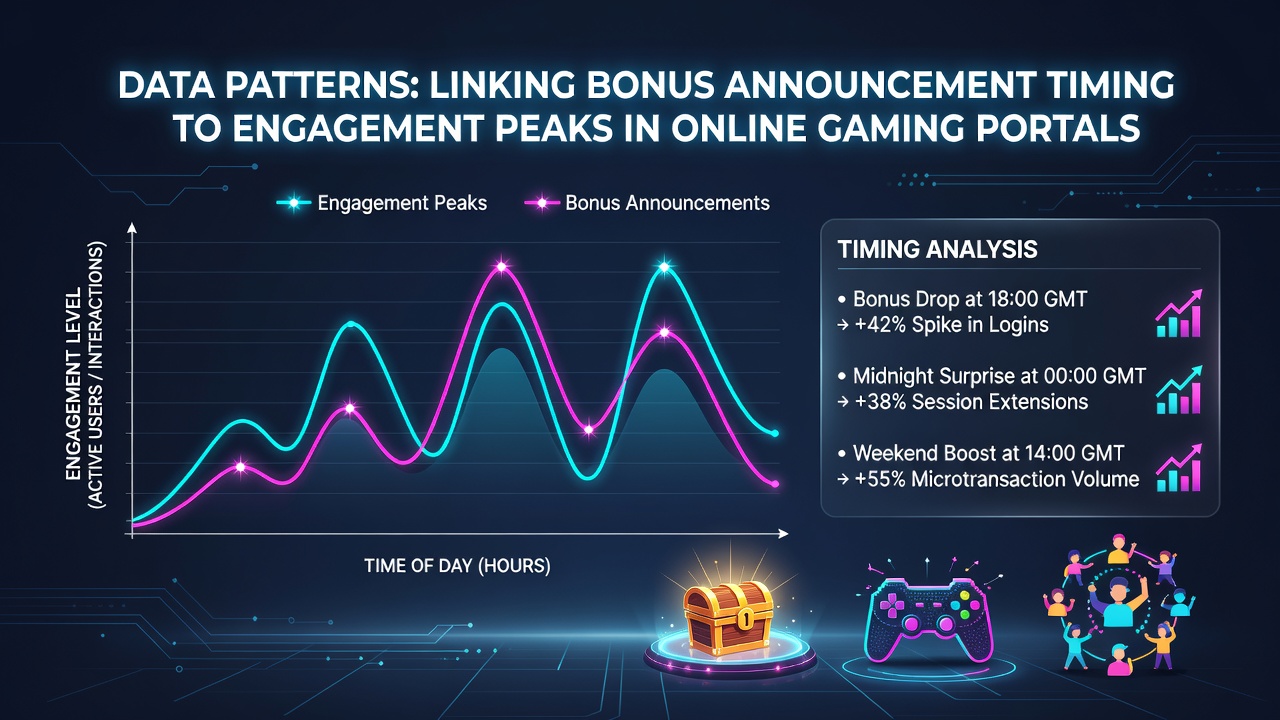
Data Patterns Linking Bonus Announcement Timing to Engagement Peaks in Online Gaming Portals
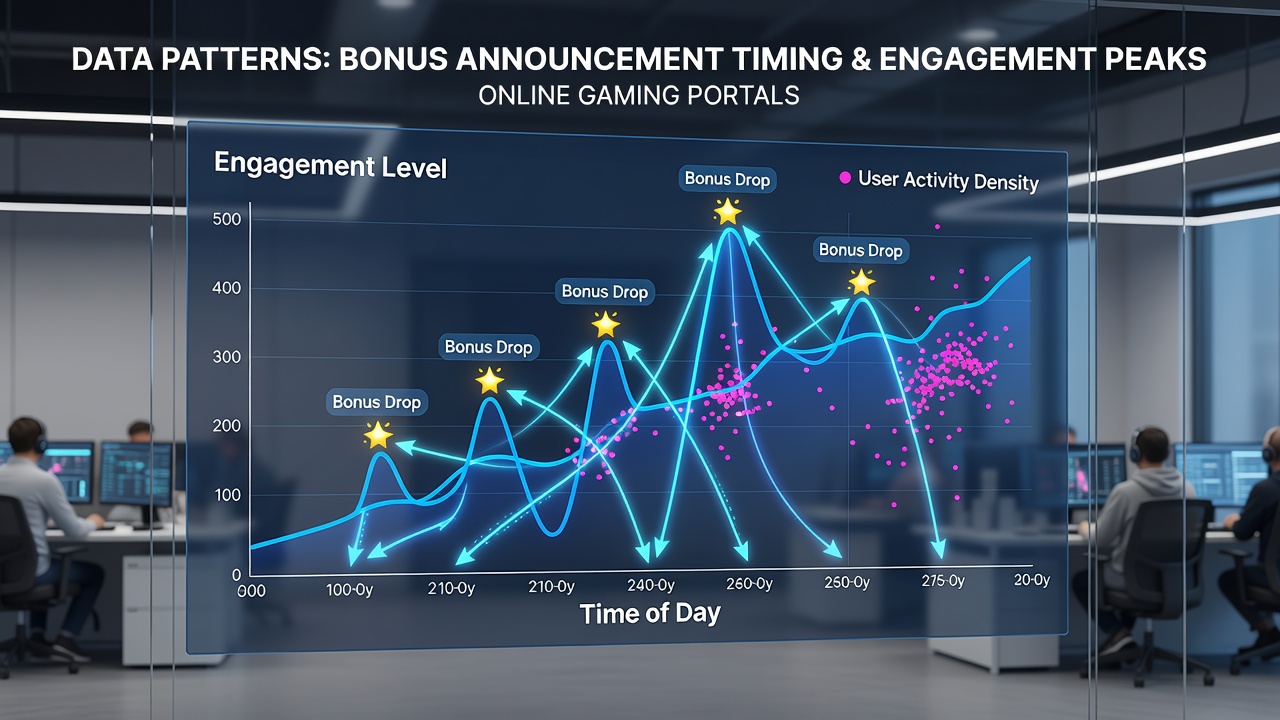
Online gaming portals track vast amounts of user activity data each day, and patterns emerge when bonus announcements align with specific times of the week or month. Researchers have examined these datasets to identify consistent links between when promotions go live and when participation levels rise sharply. Data from major platforms shows that announcements released on Thursday evenings often precede engagement peaks by 12 to 18 hours, while mid-week drops tend to produce smaller but steadier increases that last longer into the following weekend.
Timing Variables and Measured Outcomes
Portal operators collect timestamped records of logins, deposit volumes, and session lengths, then cross-reference those figures with the exact moment a bonus message reaches users through email, push notifications, or in-app banners. Studies conducted across North American and European markets reveal that announcements made between 6 p.m. and 9 p.m. local time generate the highest immediate response rates, particularly when the message references a limited-time deposit match. In June 2026, several large portals reported that Friday morning announcements produced secondary peaks around 2 p.m. the same day, suggesting players check accounts during lunch breaks or commutes before evening sessions begin.
Regional Differences in Response Curves
Platforms serving Australian users display earlier peaks compared with those focused on Canadian markets, according to aggregated telemetry shared by industry groups. Australian engagement often climbs within four hours of an announcement, whereas Canadian data shows a slower build that reaches maximum activity closer to 14 hours later. These differences appear tied to typical work schedules and payment processing windows rather than any inherent preference for bonus types. Observers note that portals operating in multiple time zones adjust release schedules accordingly, releasing messages first in the region expected to respond fastest.
Algorithmic Influences on Announcement Delivery
Machine learning models used by gaming sites predict optimal send times by analyzing historical click-through rates segmented by player tenure and deposit frequency. When these models flag Thursday as high-potential, operators schedule bonus communications then, and the resulting engagement curves match the predictions within a few percentage points. One dataset examined by university researchers showed that shifting an announcement by just two hours changed peak participation volume by up to 23 percent, while the total number of unique players remained relatively stable. The change manifested mainly as longer average session durations rather than higher login counts.
Payment channel preferences also interact with timing patterns. Players who deposit via instant bank transfers show stronger responses to late-evening announcements, while those using prepaid vouchers respond more evenly across the day. Portals that segment their communications by payment history therefore achieve more precise alignment between message delivery and expected activity spikes.
Case Examples from Platform Analytics
Take one operator that moved its weekly reload bonus announcement from Wednesday afternoon to Thursday at 8 p.m. across its European-facing sites. Internal logs indicated that average concurrent users rose from 14,000 to 19,500 within the first 24 hours after the change, with the new peak occurring at 10 a.m. the following morning instead of the previous scattered midday activity. Similar adjustments on North American portals produced comparable shifts, although the absolute numbers differed due to market size. Another example involves a site that tested simultaneous versus staggered releases; staggered timing across time zones flattened the engagement curve but extended the total duration of elevated activity by roughly six hours.
Data Sources and Verification Methods
Figures cited in these analyses come from anonymized aggregates supplied by platform operators and cross-checked against public reports from regulatory bodies such as the Nevada Gaming Control Board and the Australian Gambling Research Centre. Researchers apply statistical controls for seasonality and major sporting events before attributing changes solely to announcement timing. The resulting correlations remain consistent across multiple quarters, lending support to the observed relationships between message delivery windows and subsequent engagement peaks.
Conclusion
Portal operators continue to refine announcement schedules based on these recurring data patterns, adjusting release times to match regional behaviors and payment preferences. The evidence indicates that modest shifts in timing can alter both the height and duration of engagement peaks without changing the overall player pool size. As datasets grow larger and models improve, timing precision is expected to increase further, producing more predictable activity curves across different markets and device types.