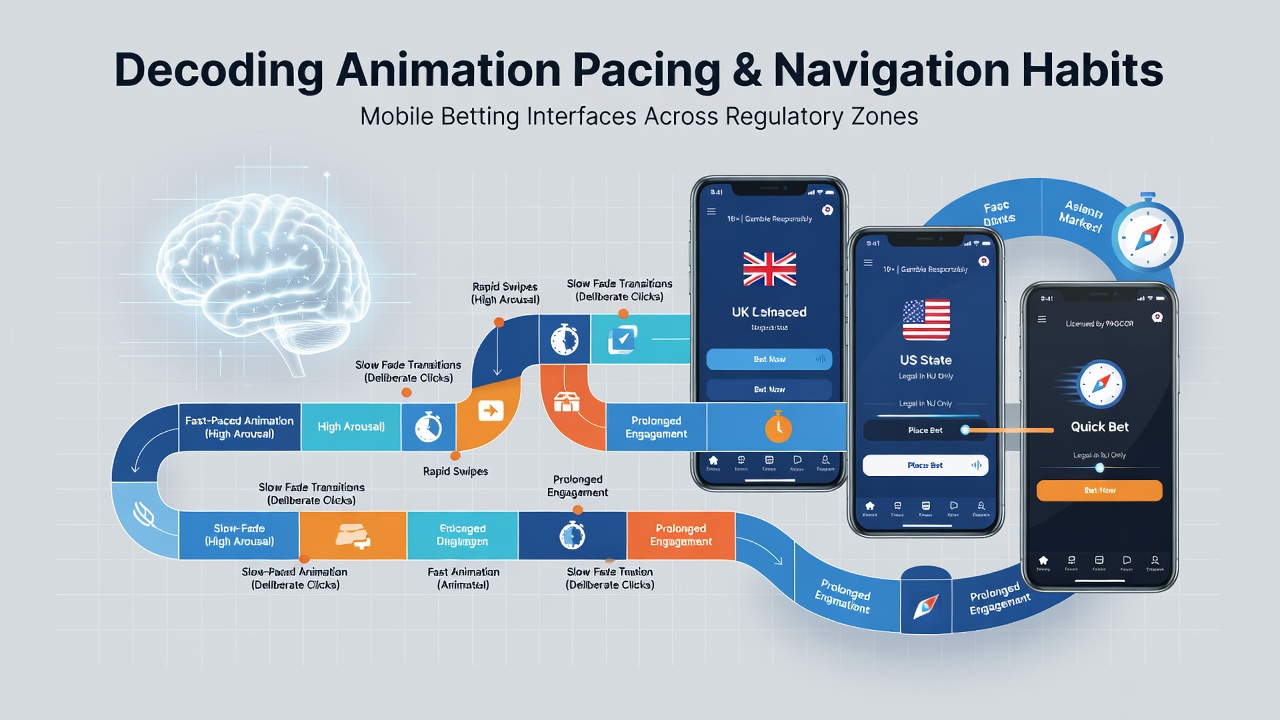
Decoding How Visual Animation Pacing Affects Navigation Habits in Mobile Betting Interfaces Across Varying Regulatory Zones
Animation pacing in mobile betting apps determines how quickly elements like spinning reels, swipe transitions, and button responses unfold on screen, and researchers have documented clear connections between these speeds and the routes users take through deposit screens, bet placement flows, and result reviews. Data from multiple markets shows that faster pacing often leads to quicker navigation sequences while slower pacing correlates with more deliberate pauses at confirmation steps, particularly in zones where regulators impose explicit guidelines on user interface timing.
Core Mechanics of Animation Pacing
Animation pacing refers to the duration and easing curves applied to visual movements within an app, and studies tracking user interactions indicate that intervals under 300 milliseconds tend to encourage rapid tapping patterns whereas intervals exceeding 600 milliseconds prompt users to linger on individual screens before advancing. Observers note that these differences emerge consistently across device types, with Android and iOS users displaying similar shifts in scroll velocity and menu selection order when pacing changes. In practice, developers adjust frame rates and transition durations to align with local rules, which in turn shapes whether bettors complete a wager in three taps or stretch the process across five or more interactions.
Regulatory Variations by Region
Regulatory zones impose distinct constraints on interface timing, and evidence from operational reports reveals that stricter markets require minimum animation durations to support responsible play prompts while more permissive areas allow accelerated sequences that reduce friction during high-volume betting periods. The New Jersey Division of Gaming Enforcement, for instance, maintains standards that influence how quickly confirmation animations resolve in state-licensed apps, leading operators to calibrate pacing so that users encounter built-in review moments without excessive delay. In contrast, certain Asian regulatory frameworks focus on overall session monitoring rather than micro-timing, permitting developers to deploy tighter animation loops that accelerate navigation through live odds displays and result animations.
European authorities outside the UK have introduced their own guidelines on digital accessibility that indirectly affect pacing choices, and data collected through 2025 demonstrates that apps serving multiple jurisdictions often run region-specific animation profiles to remain compliant. Those profiles produce measurable differences in navigation depth, with users in stricter zones showing higher rates of screen revisits before finalizing bets. By August 2026, several operators had rolled out updated frameworks that dynamically adjust pacing based on detected user location, further highlighting how regulatory boundaries translate into distinct interaction rhythms.
Observed Navigation Patterns
Navigation habits shift noticeably when animation pacing changes, and session analytics indicate that faster transitions reduce the time spent on category menus while slower ones increase dwell time on risk disclosures and balance checks. Researchers tracking swipe gestures found that users exposed to rapid reel spins completed more bets per minute yet revisited account summaries less frequently than those navigating through measured, deliberate animations. These patterns hold across demographic groups, though age cohorts exhibit varying sensitivity to pacing adjustments.
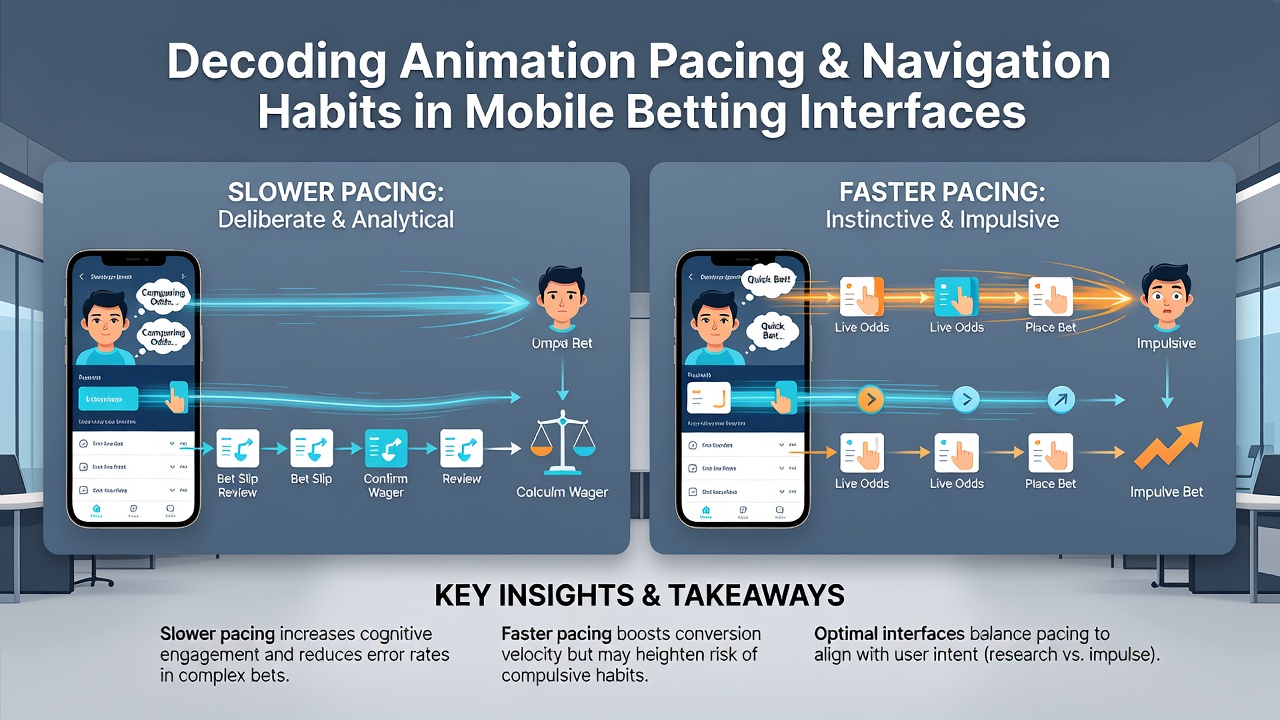
One documented case involved a platform operating in both North American and Oceanic markets that maintained separate animation libraries for each, and the resulting data showed elevated menu exploration in the slower-paced region alongside streamlined direct-bet paths in the faster environment. Such differences compound over repeated sessions, producing divergent loyalty and engagement metrics tied directly to the underlying pacing rules.
Data and Research Insights
Industry reports compiled through mid-2026 reveal that animation pacing influences not only immediate navigation but also long-term habit formation, with users adapting their finger movements and attention allocation to match the rhythm of their primary app. Academic analyses from institutions studying human-computer interaction in gaming contexts confirm that these adaptations occur within days of exposure to a new pacing scheme. Regulatory bodies in Canada and Australia have begun incorporating interface timing reviews into broader compliance audits, recognizing that pacing choices affect how players encounter mandatory breaks and limit-setting tools.
Cross-zone comparisons further illustrate that apps serving overlapping user bases must balance competing requirements, and operators report deploying A/B tests that isolate pacing variables while holding other design elements constant. The outcomes consistently point to pacing as a primary driver of navigation sequence length and decision checkpoint frequency.
Conclusion
Visual animation pacing operates as a quiet but powerful variable in mobile betting interfaces, and its effects on navigation habits become especially pronounced when mapped across regulatory zones with differing rules on timing and user safeguards. Continued monitoring through 2026 and beyond will likely refine understanding of these interactions as more markets introduce location-aware animation controls and standardized measurement protocols.