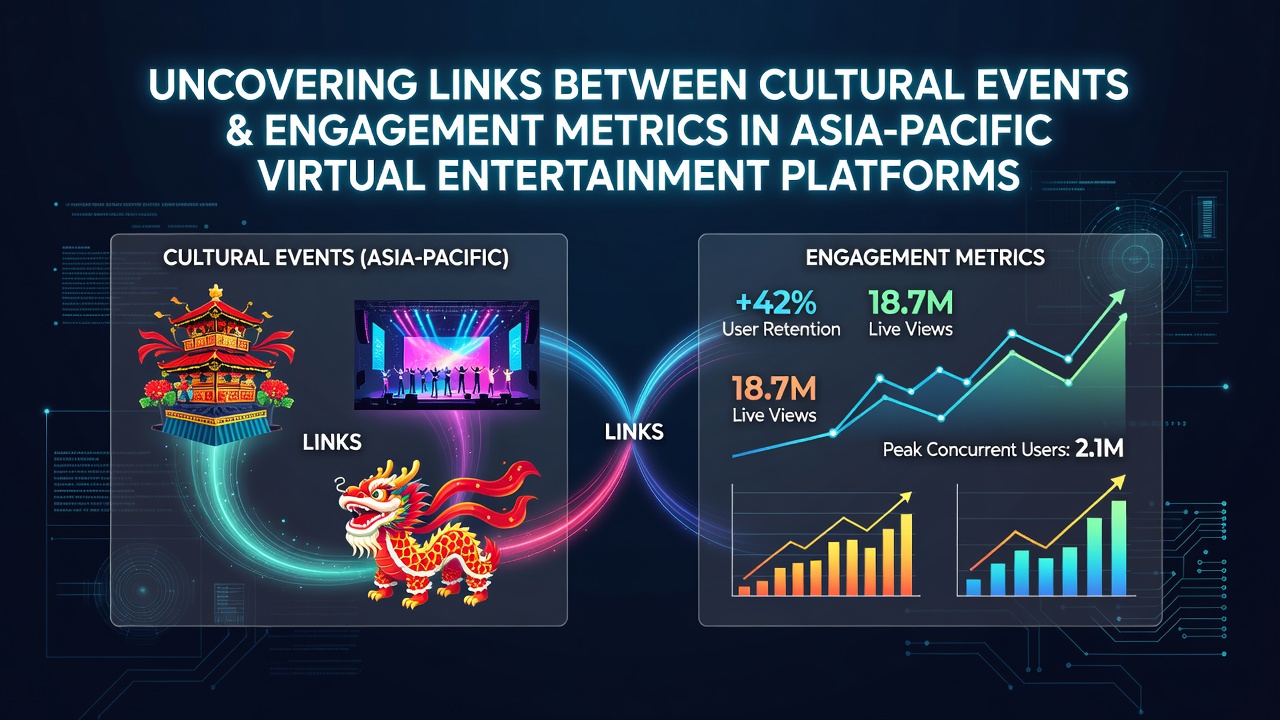
Uncovering Links Between Cultural Events and Engagement Metrics in Asia-Pacific Virtual Entertainment Platforms
Cultural events across the Asia-Pacific region generate measurable shifts in how users interact with virtual entertainment platforms, and researchers track these patterns through login frequency, session duration, content shares, and concurrent viewer counts. Platforms that host live streams, virtual concerts, social games, and interactive media experiences record consistent upticks when festivals such as Lunar New Year, Diwali, Cherry Blossom season, and Chuseok take place, while quieter periods between events show steadier but lower baseline activity. Data collected from multiple markets indicates that these spikes occur because participants seek shared virtual spaces to celebrate remotely or connect with diaspora communities, and platform operators adjust server capacity and promotional content accordingly. Observers note that East Asian markets demonstrate particularly strong correlations during spring festivals, whereas South and Southeast Asian regions show pronounced engagement around harvest and religious observances. In June 2026, preparations for upcoming Dragon Boat Festival activities already influenced scheduling decisions on several platforms, with operators adding themed virtual rooms and collaborative challenges weeks ahead of the actual dates to capture early interest from users in China, Singapore, and Taiwan. These adjustments reflect patterns identified in earlier years when advance promotions extended engagement windows by several days.Regional Event Patterns and Platform Responses
Japan’s cherry blossom season produces one of the clearest engagement surges each year, with platforms offering virtual hanami viewing parties that allow users to upload personal photos alongside live feeds from famous viewing spots. Metrics from these periods reveal longer average session times compared with non-festival weeks, and concurrent user peaks align with evening hours in major cities such as Tokyo and Osaka. Similar patterns appear during South Korea’s Chuseok holiday, when platforms introduce family-oriented virtual spaces and users participate in digital ancestral tribute simulations that drive repeated logins throughout the multi-day observance.
India’s Diwali celebrations create parallel effects on platforms popular in the subcontinent, where users stream special content, join virtual firework displays, and exchange digital greetings. Session data shows elevated return rates on the days immediately preceding and following the main festival, while Australia’s observance of cultural events such as NAIDOC Week generates smaller but sustained increases in engagement among users interested in Indigenous storytelling streams and interactive documentaries.
Quantitative Shifts in User Behavior
Analyses of platform telemetry indicate that cultural events correlate with changes across several key metrics. Login frequency rises between 25 and 40 percent during peak festival days in most tracked markets, while average session length extends by 15 to 30 minutes when users join group activities rather than solo browsing. Share rates for event-themed content increase notably, and operators record higher conversion rates for in-platform purchases of virtual goods tied to the celebrations. These figures come from aggregated reports released by regional industry groups and government-affiliated research bodies that monitor digital media consumption.
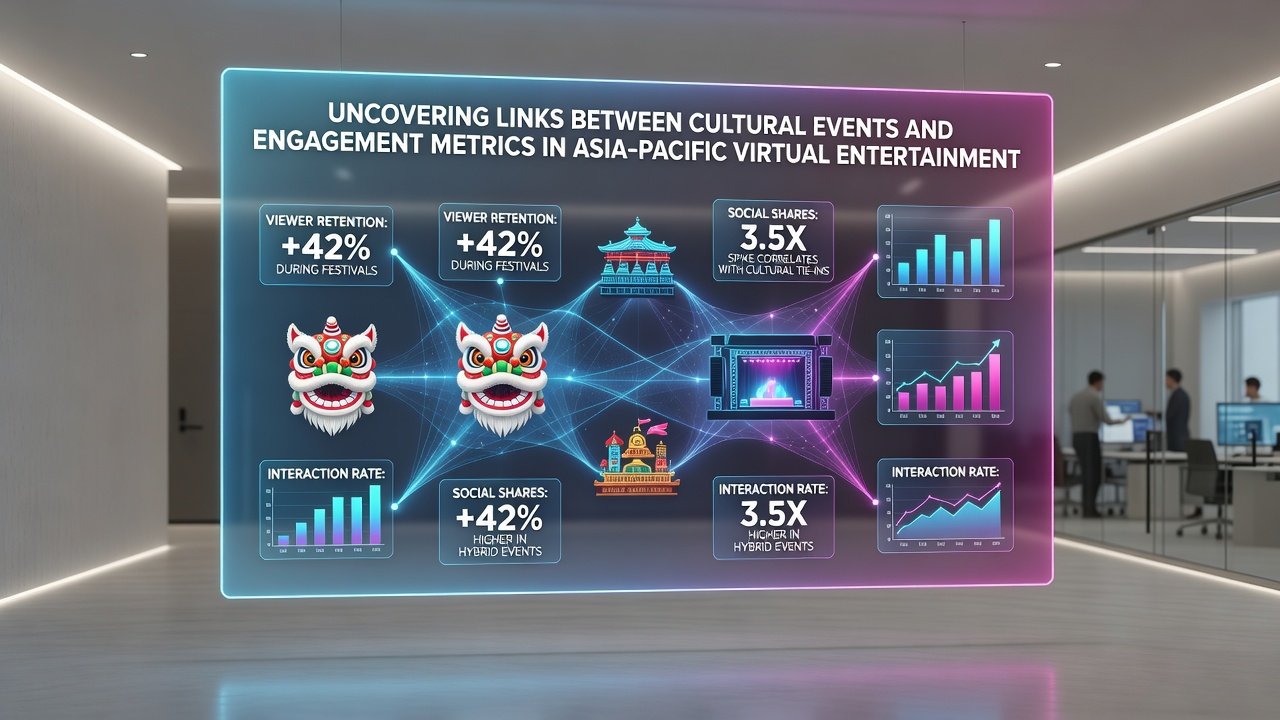
Cross-platform comparisons further illustrate how event timing affects different content categories. Live music streams experience the largest absolute increases during music-heavy festivals, whereas social simulation games see steadier growth across religious and harvest events. In June 2026, preliminary indicators already pointed to growing interest in summer-themed virtual festivals scheduled for later months, with early registration numbers exceeding those recorded in the same period the previous year.
Cross-Border and Diaspora Influences
Virtual entertainment platforms also capture engagement from diaspora populations who use these spaces to maintain connections during cultural events celebrated in their countries of origin. Users located outside the Asia-Pacific region often join live streams originating from home markets, which extends global concurrent viewer counts and creates secondary engagement waves in time zones that differ from teh primary celebration areas. Platform operators respond by offering multilingual interfaces and synchronized event schedules that accommodate multiple regions simultaneously.
Research from the Korea Creative Content Agency has documented how these transnational participation patterns influence content localization strategies, prompting developers to incorporate flexible event calendars that adapt to both local holidays and international user bases. Similar observations appear in reports issued by Singapore’s Infocomm Media Development Authority, which tracks digital platform usage across Southeast Asian markets and notes consistent alignment between cultural calendars and usage peaks.
Measurement Approaches and Data Sources
Analysts employ a combination of server logs, anonymized user surveys, and third-party analytics tools to establish these links. Time-series comparisons isolate festival periods from surrounding weeks, while cohort analysis separates new users attracted by event promotions from returning participants. These methods allow researchers to quantify how specific cultural triggers translate into sustained behavioral changes rather than one-time spikes.
Industry organizations continue to refine measurement frameworks to account for overlapping events across different countries, since simultaneous festivals in neighboring markets can produce compounded effects on shared regional platforms. The result is a growing body of evidence that cultural calendars function as reliable predictors of engagement fluctuations in the Asia-Pacific virtual entertainment sector.
Conclusion
Links between cultural events and engagement metrics in Asia-Pacific virtual entertainment platforms rest on observable patterns in login data, session duration, and content interaction rates. As operators incorporate festival timing into content planning and infrastructure scaling, these connections become more pronounced, and continued monitoring through 2026 and beyond will clarify how evolving user behaviors respond to both traditional observances and emerging virtual celebration formats.